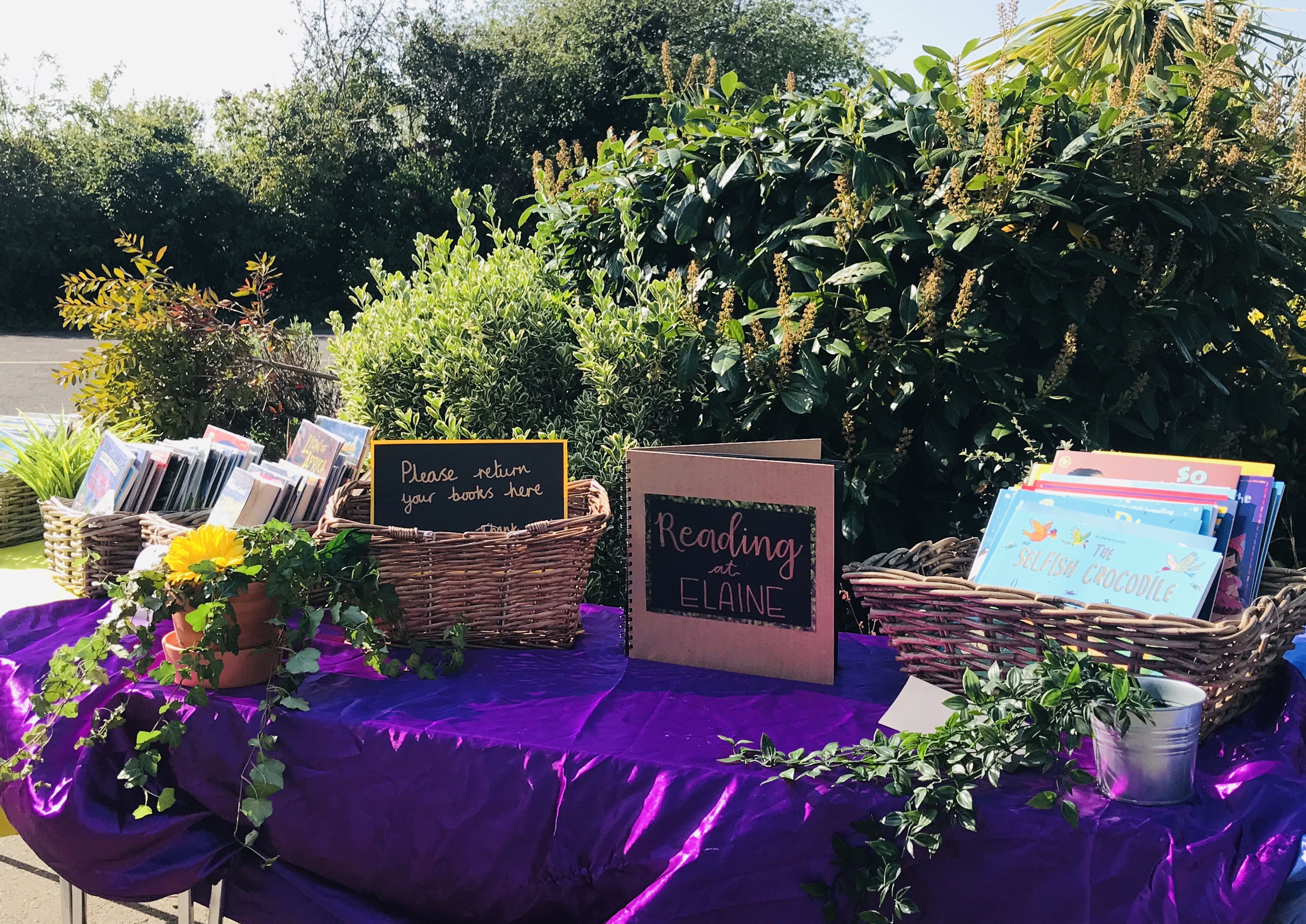

Reading & Phonics
At Elaine Primary School, we place reading at the very heart of our curriculum, viewing it as the primary gateway to academic success, personal enrichment, and social justice. In alignment with the Department for Education’s Strong Foundations framework and our school-wide commitment to educational excellence, we ensure that every child—regardless of their starting point—develops the phonetic precision, linguistic fluency, and deep comprehension skills required to become a lifelong reader.
Our reading strategy is divided into two clear, interlinked pathways: learning to read through systematic, rigorous synthetic phonics, and reading to learn through a rich exposure to high-quality, diverse literature that ignites curiosity about the world.
Learning to Read:
We teach early reading through Little Wandle Letters and Sounds, a systematic synthetic phonics programme that is delivered with absolute consistency across Nursery, Reception, and Key Stage 1.
- Rigorous Phonic Tracking: From the moment children enter our early years settings, we use the Little Wandle Assessment Tracker to conduct baseline assessments and routinely identify individual starting points. Our Phonics Lead and class teachers monitor this data meticulously, ensuring that any gaps in Grapheme-Phoneme Correspondence (GPC) or oral blending are identified immediately.
- Fluid Keep-Up Interventions: We do not leave a child’s reading success to chance. Any pupil who misses a phonetic benchmark is instantly placed into a daily Little Wandle Keep-Up intervention. These groups are highly precise, targeted, and adapted fluidly every three weeks based on fresh diagnostic assessments to ensure that no child falls behind.
- Strictly Decodable Books: To build absolute confidence and eliminate guesswork, the books children read in school and take home are strictly matched to their secure phonetic knowledge. These phonetically decodable books present only the GPCs and common exception words the child has been explicitly taught, ensuring they can decode with fluent independence.
- Securing Transcription and Oral Foundations: To prevent cognitive overload, we ensure children can say it before they write it. In our early literacy sessions, we emphasise oral composition and transcription fluency—specifically letter formation, pencil grip, and handwriting families—before expecting children to engage in complex written tasks.
Reading to Learn:
As our pupils master the mechanics of decoding, the focus shifts seamlessly toward language comprehension, vocabulary acquisition, and critical thinking.
- Whole-Class Reading Approach: In Key Stage 2, we utilise a whole-class reading model that exposes all pupils to highly ambitious, vocabulary-rich core texts linked to our global curriculum. This approach allows teachers to explicitly model advanced reading strategies, including scanning, skimming, and summarising, while fostering high-quality peer-to-peer academic talk.
- Targeting Advanced Inference (Domain 2d): Guided by our detailed Question Level Analysis (QLA) of statutory papers, we actively teach pupils how to navigate complex, multi-step reading questions. We focus heavily on Domain 2d (Inference and Justification), teaching children to mark text systematically and construct structured, written justifications using precise evidence from the text.
- Integrating Critical Thinking Scaffolds: We use our signature critical thinking tools to deepen comprehension. Pupils use Perspective Glasses to explore authorial intent and character motivations, and the Opinion Continuum to debate opposing thematic viewpoints within a text, ensuring they move from literal retrieval to analytical evaluation.
Fostering a Lifelong Love of Reading:
We believe that being a reader is an identity, not just a skill. We purposefully design our school environment and routines to celebrate the joy of books.
- Daily Drop Everything And Read (DEAR) Time: Every class participates in DEAR sessions. During this time, the entire school community—including staff—stops to read for pleasure. This is complemented by high-quality, engaging daily teacher read-aloud sessions where adults model expressive reading and introduce children to new genres and authors.
- Diverse and Culturally Rich Libraries: Our school library and classroom reading corners are regularly audited and refreshed to ensure they house a diverse, current, and exciting stock of books. These texts reflect a wide range of cultures, backgrounds, and interests, ensuring every child can see themselves represented in the pages they read.
- Pupil Reading Leadership: We empower our children to lead our reading culture from the front. Our older pupils can apply to become Reading Ambassadors or join the Child Librarian programme. These pupil leaders take active responsibility for organising library spaces, recommending books in assemblies, and running reading initiatives for younger classes.
- The Reading Festival: Each year, we host a phase-wide Reading Festival to celebrate our pupils' reading journeys. This event showcases children’s favourite books, features guest readers, and provides pupils with a platform to deliver presentations on texts they have deeply explored.
Parents as Co-educators
We work in close relational partnership with parents and carers, recognising that a child’s journey to reading excellence starts at home.
- Digital Learning Platforms: We provide all families with access to Collins Hub and Serial Reader, allowing children to access a vast library of decodable ebooks and age-appropriate texts on digital devices at home.
- Parent Phonics Workshops: We host regular, hands-on workshops and live phonics demonstration lessons. These sessions demystify the phonics screening check and provide parents with practical, low-cost strategies to support blending, decoding, and reading for pleasure at home.
- Home-School Reading Journals: We utilise structured reading journals to facilitate clear, daily communication between teachers and parents, celebrating small-step reading milestones and tracking daily reading habits.